At the , more than half of the teams are led by foreign coaches: 26 of the 48 teams.
Among them are Saudi Arabia, led by Greek tactician Georgios Donis, whose side began their campaign with a 1-1 draw against Uruguay in Miami. Yet few of those relationships run deeper than Donis’s bond with Saudi football – so deep, in fact, that calling him an “outsider” now feels wide of the mark.
Back in 2015, Donis arrived in Saudi Arabia as an unlikely appointment from abroad, entrusted with reviving one of the country’s great footballing powers: Al Hilal.
More than ten years on, he can now speak to journalists in Arabic, with the assurance of a coach whose second career in the Middle East has brought him greater recognition – and arguably greater influence – than anything he experienced in Europe.
“This is Saudi Arabia’s third World Cup in a row and their seventh overall. That pedigree deserves respect,” he said ahead of their opener against La Celeste, before making the connection personal: “We deserve to be here, just as much as everyone else.”
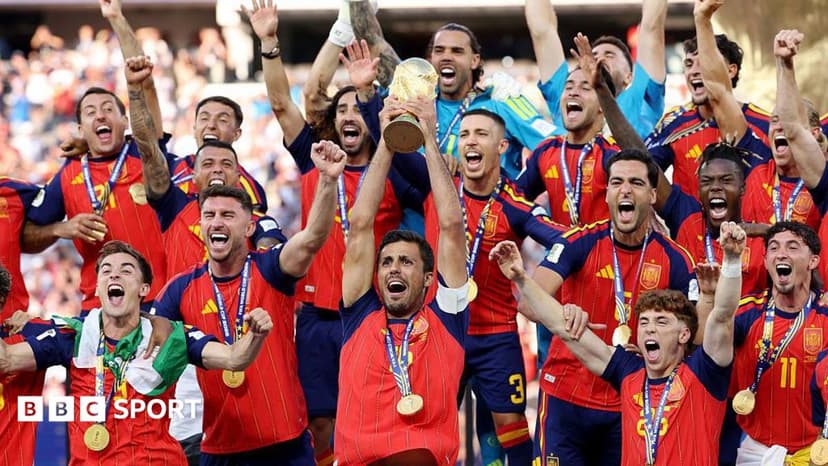
Now comes a tougher test: reigning European champions Spain in Atlanta on 21 June, in what will be only Donis’s second competitive match in charge of Saudi Arabia.
Appointed in April after the departure of Frenchman Herve Renard, Donis brought something to the table that few candidates could compete with: a relationship with Saudi football forged over years, across clubs, dressing rooms and touchlines.
Born in Frankfurt, Germany, Donis helped Panathinaikos reach the UEFA Champions League semi-finals as a player in the 1995-96 season. Once again, Ajax – the club that had beaten them in the 1971 European Cup final – brought their run to an end. He later made history as the first Greek player to appear in the Premier League after signing for Blackburn Rovers, who had recently been crowned champions in 1995. In England, he also went on to represent Sheffield United and Huddersfield Town, where he eventually hung up his boots at the turn of the millennium.
Before Saudi Arabia became such a defining part of his story, Donis had spent 13 years building his coaching career closer to home, in Greece and Cyprus. Donis arrived at Al Hilal in 2015 with Saudi Arabia’s most popular club in need of direction; between the start of 2012 and the end of 2014, no fewer than seven coaches had passed through the dugout.
Arriving midway through the season, Donis quickly gave Al Hilal greater tactical structure and competitive edge. Blue Power would go on to win the King’s Cup and the Saudi Super Cup, and reach the AFC Champions League semi-finals. Then, in Donis’s first full league campaign, he guided them to a runners-up finish – results that helped establish his reputation in the country.
From then on, Donis became a familiar figure in Saudi football. After a five-year spell that took him to the United Arab Emirates, Cyprus, Greece and Israel, Donis returned to Saudi Arabia to take charge of Al Wehda, Al Fateh and, most recently, Al Khaleej.
At each club, he left the same mark: disciplined, compact teams capable of competing against stronger squads. Off the pitch, Donis is not one to seek the spotlight, but his deep roots in Saudi football have earned him trust and respect among Saudi supporters and stakeholders alike.
“First and foremost, I am grateful to Saudi Arabia,” he said. “When I first set foot in the country, I could never have imagined where the journey would take me – Saudi Arabia has become my second home. The people have always been helpful, welcoming and kind.”
Donis knows the squad well, having worked directly with stars such as Salem Al Dawsari and Salman Al Faraj, while also helping shape the development of striker Feras Al Buraikan. Yet, with the clock ticking and the tournament already looming by the time of his appointment, he chose to keep the tactical demands simple.
The Saudis went in front against the Uruguayans and were largely untroubled during the early spells of pressure. After the interval, however, the momentum shifted. Mohammed Al Owais impressed in goal, but even his efforts were not enough to prevent La Celeste from equalising under sustained pressure.
That shift in momentum was a recurring theme in Donis’s post-match press conference. “I can say that, in the first half, we managed the game better. We had a little more possession, limited their chances and took the lead,” he reflected, before acknowledging: “In the second half, we no longer had the strength to contain them.
“There simply wasn’t enough time to prepare. Everything happened very quickly and, yes, it did help that I already knew [some of] the players. But knowing them is one thing; working with them on the training pitch is another.”
That is the challenge Donis has accepted: to make the Green Falcons’ standards, belief and mood soar. “If we look at the game as a whole, and consider the energy, experience and depth of our opponents, taking a point was still a valuable result. That gives us something positive to build on,” he added.
The opening draw was more than a point gained – it was a sign that the players had taken his message on board, and that his trust in them had already begun to be repaid.
Sources: FIFA Official