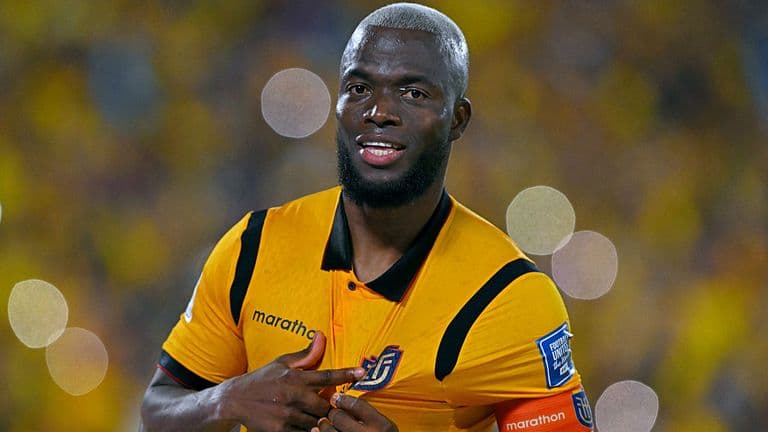
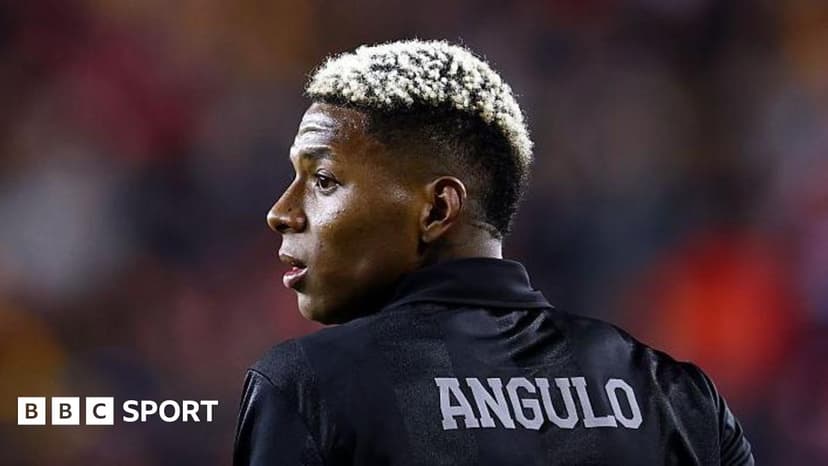
Piero Hincapie and Willian Pacho will join preparations for theon 1 June – just two days after representing Arsenal and Paris Saint-Germain respectively in the UEFA Champions League final in Budapest.
This weekend's winner will also qualify for a pair of global tournaments, the FIFA Intercontinental Cup 2026™ and the next edition of the FIFA Club World Cup™.
It means the country will, for the second year running, have a European club champion after Pacho became the first Ecuadorian to achieve that feat with PSG in 2025. This is not a mere coincidence.
Born just months apart in Ecuador’s Esmeraldas province – Hincapie in Esmeraldas city and Pacho in Quininde – both defenders are gearing up for their second World Cup, having made their debuts at Qatar 2022. While Pacho did not see action three-and-a-half years ago, Hincapie played every minute during Ecuador’s group-stage campaign.
The similarities between the two do not end with where they grew up. In 2020, both won the CONMEBOL Libertadores Under-20 playing for Independiente del Valle – still the only side from Ecuador to ever lift the trophy.
Alongside the likes of Moises Caicedo and Pedro Vite, they helped defeat River Plate 2-1 in the final in Asuncion. Today, both are pillars of the Ecuador national team ahead of a World Cup campaign that begins on 14 June against Côte d’Ivoire, before further Group E matches against Curaçao and Germany.
Yuri Solano, the coach who guided Independiente to the aforementioned title, now works as youth development director at Rubin Kazan in Russia. The 46-year-old was also previously head of youth development at Chicago Fire’s southwest academy in Major League Soccer. Speaking ahead of the UEFA Champions League final, he reflected on the journeys of the two defenders.
“First, I think about all the young players in Ecuador who see football as a path to a better future,” Solano told FIFA. “It’s a window for them, a chance to help their families and improve their lives. Piero and Pacho are part of this golden generation that has gone abroad and set a tremendous example.
“Making it professionally is difficult. Staying at the very highest level is even harder. They are examples of hard work and discipline, and those of us involved in youth football development should also take note. Why did they make it? Which processes worked well? Who had a major influence? Which areas had the biggest impact on their development? They are case studies.”
Asked what separates Pacho and Hincapie – and what binds them together – Solano did not hesitate. In his view, Ecuador’s two standout defenders represent contrasting characters and different development paths, yet share the same fierce competitive edge and determination that has carried them to the top of the European game.
“They are completely different personalities, but what unites them is their extremely high competitive level,” Solano explained. “But they are very different in the way they behave. Piero is sharper, more streetwise. He is always thinking two steps ahead. He used to tell us some very curious stories. He came through Liga de Quito’s academy, where he was expelled for some kind of mischief.
“On the pitch, he wants to get the better of everyone, and defensively he’s always thinking about what you [as the attacker] are going to do and how he can counter it. The lives these boys have lived sometimes take them to that level. He’s very clever. Pacho is calmer and more composed. He thinks things through more and is always paying attention to his movements and the small details.”
Solano recalled that Pacho did not initially stand out physically during his teenage years. “At that age, he didn’t impress people because of his physique or speed," he said. "He seemed slower and less reactive. That’s why he wasn’t selected for youth national teams. Scouts overlooked him because he didn’t dominate physically at youth level. “That is perhaps one difference: the development process. Piero was already an important player at U-17 level. But what both players shared was hunger – that internal motivation and ambition to succeed and help their families.”
Solano reunited with both players four years after their Libertadores triumph during Ecuador’s friendly against Argentina in Chicago ahead of the Copa America 2024. “They invited me to the match and gave me tickets,” he explained. “But honestly, what gives me even more pleasure is simply sitting down, watching them play and enjoying the moment.
“The role of a youth coach is not to become friends with players. It’s to develop them, push them and demand more from them. Sometimes that doesn’t leave the best impression, but we always maintained a very good relationship. We shared some very special moments during the U-20 Libertadores, which remains the only title an Ecuadorian side has ever won in the competition, because taking a youth trophy away from Brazil and Argentina is very difficult.”
Now, from Kazan, Solano will watch proudly as his former players compete on football’s biggest stage. And he will experience those same feelings again, with a touch of nostalgia, during the World Cup. “Whenever you watch them, it feels like yesterday – seeing them playing on rough fields under the heat in Guayaquil. Then suddenly you see them in huge stadiums, on perfect green pitches, and you think, ‘That’s football. That’s the beauty of football.’”
Sources: FIFA Official