In , few names evoke as much pride across generations as Os Magriços. Inspired by a legend of 12 knights prepared to defend Portugal’s honour on English soil, the nickname became associated with the team that secured third place at the 1966 FIFA World Cup™ in England – still the nation’s best-ever World Cup campaign. If there is one thing that has endured alongside that team’s legacy, it is the power of a dream.
Sixty years on, Antonio Simoes still carries that World Cup close to his heart. As one of the youngest members of the squad that announced Portugal’s arrival on the global football stage, he still feels deeply connected to the memories of that historic campaign.
Speaking to FIFA, Simões reflected on the influence of legendary figures such as Eusebio, Otto Gloria and Mario Coluna, while also sharing his hopes for the current generation as Portugal’s preparations for the are well under way.
“The team of 1966 put Portugal on the map. I have absolutely no doubt about that,” Simoes told FIFA. “Portugal was a marginalised nation in football, and we made history with black and white players united in a special way within a team.”
Simoes was already familiar with football’s biggest stages before arriving at the World Cup. A few years earlier, he had become the youngest player to win the European Cup, a record that remains unmatched in the modern UEFA Champions League era. According to UEFA, he was 18 years and 139 days old when Benfica beat Real Madrid in the 1961-62 final. “That prepared me for the biggest stage of my life – the World Cup,” he recalled.
Within the national team, he learned invaluable lessons about unity from the senior players around him. Much of that spirit, he believes, came from captain Mario Coluna, one of the most respected figures in Portuguese football history. “Few leaders have impressed me as much as he did,” Simoes said. “He spoke little and did all his talking through his actions. He combined authority and respect in the way an older brother would.”
It was after Portugal’s victory over Pele’s Brazil in the group stage that the squad truly began to believe something extraordinary was possible. Brazil had arrived as reigning world champions after lifting the trophy in 1962, and sharing a group with them had been a major concern. Portugal approached the match with respect for their opponents, but emerged as 3-1 winners – with Simoes scoring the opening goal.
“The feeling of scoring against Brazil at a World Cup is indescribable,” he said. “After the match, coach Otto Gloria told us in the dressing room, ‘It’s clear now we’re going all the way at this World Cup.’ And that wasn’t the only memorable thing he said during the tournament.”
Gloria, the Brazilian coach who oversaw Portugal’s remarkable run, remains an unforgettable figure in Simoes’ memory. That said, there was one occasion during the tournament when the euphoric Portuguese squad quite literally forgot about their manager. That moment came after the dramatic quarter-final against Korea DPR.
At half-time, Portugal were 3-2 down when Gloria stormed into the dressing room. “He said, ‘You can beat Brazil but now you’re losing to this side? If we lose, I’m not coming back to Portugal with you,’” Simoes recalled.
His team responded magnificently, coming from behind to win 5-3 in one of the most famous comebacks in World Cup history. Yet the most amusing episode came afterwards.
According to Simoes, the team left Liverpool without realising that Gloria was not on the coach. The manager had stayed behind at Goodison Park speaking to journalists and only reappeared later at the team hotel in Manchester. “To this day, I still remember him arriving and shouting, ‘You win one match and already forget about the coach?’” Simoes said.
The dream of Os Magriços eventually came to an end in the semi-finals with a 2-1 defeat to hosts England. Portugal went out with a win against the Soviet Union by the same scoreline in the third-place play-off, leaving the tournament with mixed emotions. “There was a bitter taste because we wanted to reach the final, but we left incredibly proud that we had put Portugal on the map,” he said.
Few memories fill Simoes with greater pride than those involving Eusebio, though. He became visibly emotional when reflecting on his friendship with the legendary Black Panther and the 14 years they spent together on the pitch.
“Eusebio had extraordinary emotional intelligence,” said the former Portugal international. “He was one of the greats. He could have been a fantastic footballer in any era. Once he said I was his white brother. Later, he told someone that I was the best player he had ever played alongside. There isn’t a single moment when I feel his absence. He is always with me.”
Now 82 years old, Simoes – forever the “kid” of Portugal’s 1966 squad – still treasures the lessons he learned from that remarkable group. “Nothing compares to the pride I feel for having been part of such a united team,” he said.
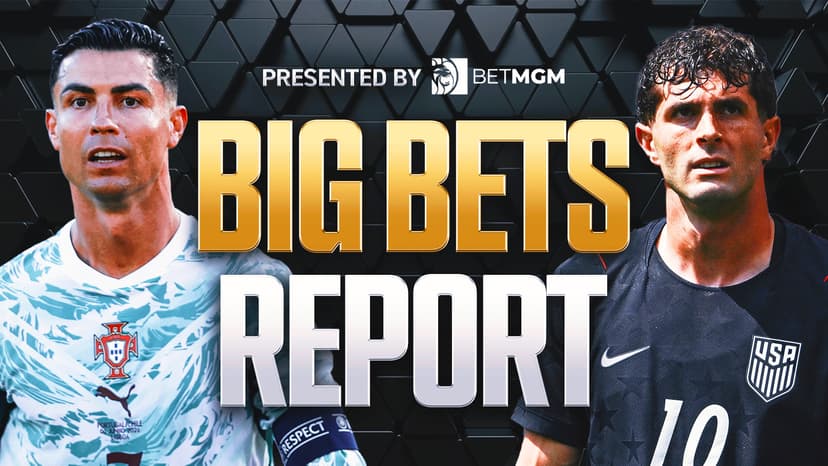
As World Cup 2026 approaches, he believes Portugal once again have every reason to dream, highlighting the importance of Cristiano Ronaldo to Portuguese football: “He is a great player, possibly facing his last chance to win the World Cup. He can still decide matches in the final third if he remains close to goal.”
“This generation has everything,” he said. “They have a strong defensive line, goalscorers up front and the thinkers of the game in the middle. If a team doesn’t have its thinkers, it struggles to go anywhere. Portugal have them. But Portugal must never lose their pride and unity. I hope every player steps onto the pitch determined to make history, understanding that humility is not submission, but rather a path to glory.”
Sources: FIFA Official