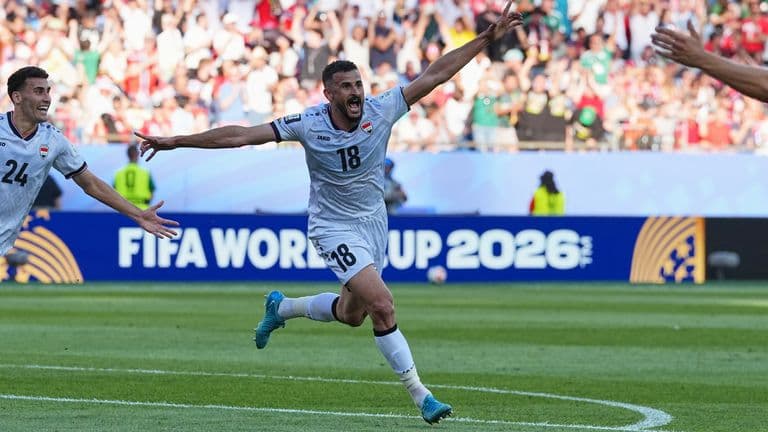
The Match
Iraq's long-awaited return to the World Cup stage began with a sobering reminder of the quality gap between the tournament's established forces and its newcomers, as Norway's Erling Haaland scored twice in a commanding 4-1 victory at Boston Stadium on June 16. The Lions of Mesopotamia showed moments of genuine quality — particularly Aymen Hussein's well-taken equaliser on the brink of half-time — but Stale Solbakken's well-organised and physically imposing Norwegian side proved far too powerful across the 90 minutes. The final score of 4-1, with Hussein adding an unfortunate own goal in stoppage time to complete the sorry picture, reflects a difficult evening for a team that dreamed of announcing Iraq's return to global football's top table.
Norway struck first when Sander Berge played David Möller Wolfe in on the left of the penalty area, and his low cross was turned in at the back post by Haaland in the 29th minute — the City striker's first World Cup goal, delivered with the assured finish that characterises everything he does. Iraq responded with courage: Ali Jasim played a clever reverse pass to Amir Al-Ammari, and from his cross, Aymen Hussein planted a composed header into the bottom corner to level matters in the 39th minute — a moment of real quality that deserves to be celebrated. But just before the interval, Haaland chased down a weak backpass, nipped in front of goalkeeper Jalal Hassan, and tapped home to restore Norway's lead. The second half saw Iraq tire as Norway's fitness and physicality told — Ostigard headed home from Odegaard's corner in the 76th minute, and Hussein's unfortunate own goal from Haaland's towering header completed a painful evening.
Standout Performers
Aymen Hussein was the bright light for Iraq in a difficult evening, and his first-half equaliser demonstrated that the Lions of Mesopotamia are capable of competing at this level when their best players perform well. His header was technically accomplished — well-timed, well-directed, and converted with the composure of an experienced international striker. That the same player would later turn the ball into his own net in stoppage time is one of football's cruellest symmetries. Ali Jasim's creativity in central midfield was also encouraging, providing the assist for Hussein's goal and consistently looking to drive Iraq forward in possession.
For Norway, Haaland was inevitably the star — a brace on his World Cup debut that confirmed everything his legion of admirers already knew. But Martin Odegaard's performance as the creative heart of Norway's midfield deserves equal recognition: his passing range, his ability to pick runners out of nothing, and his corner that led directly to Ostigard's header were all hallmarks of a player operating at his absolute best.
Tactical Picture
Iraq's 4-4-2 shape was defensively compact in the opening stages but struggled to cope with Norway's physicality in aerial duels and their speed in transition. When Haaland dropped deep and Norway's wide players ran in behind, Iraq's centre-backs found themselves in difficult decision-making positions — whether to step to Haaland and leave the runners free, or hold their line and allow Haaland to turn and drive at them. Norway found the answers each time. Offensively, Iraq showed good attacking instincts — Jasim's creativity was a constant — but lacked the final-third quality to sustain pressure on a Norway backline that was rarely tested after the equaliser.
Group Implications
Iraq sit at the bottom of Group I with zero points after the opening round, alongside Senegal. France's 3-1 win over Senegal means that both France and Norway — Iraq's remaining opponents — already have three points from their first match. The mathematics are straightforward: Iraq need wins in their remaining fixtures to have any chance of progressing. The first-round performance suggests that, while the talent is there to compete, the step up in quality and physicality from their qualifying opponents has been significant. How the squad responds to this setback in training and in the dressing room will determine whether they produce a surprise result in the matches ahead.
One to Watch Next
Aymen Hussein remains the focus for Iraq's next fixture. Despite the heartbreak of the own goal at the end of the Boston defeat, his equaliser earlier in the match demonstrated he has the quality to score at this level. If coach Radhi Shenaishil can build Iraq's offensive structure around Hussein's movement and finishing ability, and if Jasim can continue to create in midfield, there is enough quality in the squad to make things difficult for their upcoming opponents. Iraq's World Cup journey will not be easy — but it is not yet over, and the Lions of Mesopotamia have shown they can score when it matters.