When Beppe Bergomi, Gabriele Oriali, and Alessandro Altobelli of Italy took on Karl-Heinz Rummenigge, Paul Breitner, and Wolfgang Dremmler of West Germany during the 1982 FIFA World Cup Spain™ final, they began perhaps the tournament’s most astonishing streak. Since then, indeed, every decider has involved at least a player apiece from Inter and Bayern Munich.
But they aren’t always on opposing sides, as Mexico 1986 showed when West Germany returned again to take on Argentina. They were armed with Bayern’s Lothar Matthaus, Dieter Hoeness, and Norbert Eder, as well as Inter’s Rummenigge, who had swapped Bavaria for Milan two years prior. They fell to a Diego Maradona-inspired Argentina, but the rematch four years later continued the streak.
Matthaus lifted the trophy that time as an Inter player, and was joined by Jurgen Klinsmann and final match-winner Andreas Brehme, while Bayern were represented by Klaus Augenthaler, Jurgen Kohler and Stefan Reuter.
That was the last World Cup held before Germany’s reunification and Die Mannschaft’s final shot at glory of the 20th Century. But Italy returned for USA 1994’s final to take on the might of Brazil with Inter’s Nicola Berti, while Brazil boasted right-back Jorginho from the German giants.
A tense game in the Pasadena sun resulted in the first World Cup final to be decided on penalties, as Brazil reigned victorious once again following Roberto Baggio’s famous miss.
The Seleção were there again in 1998, taking on France on Les Bleus’ home patch, in the first final of the run which didn’t contain one of Germany or Italy. France started with Bayern’s Bixente Lizarazu and Inter’s Youri Djorkaeff, but the eyes of the world were trained on the latter’s team-mate, as concerns over Ronaldo’s fitness dominated a game in which France cruised to victory.
But Korea/Japan 2002 would be his tournament, rocking up to the showpiece match against Germany as the runaway leader in the race for the adidas Golden Shoe, and ready to take on Bayern’s Oliver Kahn, Carsten Jancker, Thomas Linke, and Jens Jeremies. The quartet were powerless to stop O Fenômeno, as his late brace sealed a fifth World Cup for Brazil.
The trophy then headed to Germany and the home of one of the sides in question for the first time since 1990. Zinedine Zidane opened the scoring, before Inter’s sole representative, Marco Materazzi, headed Italy level in the 19th minute.
Much like ‘94, Italy made it to a final which had to be decided on penalties, as chances, extra time, and perhaps the most infamous moment in World Cup Final history passed to take it there. Bayern’s Willy Sagnol scored his spot-kick for France, but David Trezeguet’s earlier miss gave the Azzurri victory.
The South Africa 2010 final saw all representatives from both clubs share the same goal for the first time since Italy 1990, as Mark van Bommel and Arjen Robben of Bayern joined Inter’s midfield maestro Wesley Sneijder. But they were narrowly edged out by Spain, as Andres Iniesta’s 116th-minute winner ensured that a player from neither club would lift the trophy for the first time since 1986.
While the first tournament held in Africa produced a decider of two nations yet to win the competition, Brazil 2014 rekindled an old rivalry, as Germany and Argentina did battle once more to make the fixture the most-played World Cup Final.
The Germans fulfilled their end of the bargain, with a total of seven Bayern players triumphant, including Phillip Lahm, Toni Kroos and Thomas Muller. None of Argentina’s three Inter players started, however, and the run was only saved once Rodrigo Palacio emerged from the bench with little over 10 minutes remaining, before Mario Gotze did the same to notch an extra-time winner.
Inter’s flagbearers may have been part of the supporting cast at the Maracana, but the roles were very much reversed at Russia 2018. Croatia defied all of the odds to reach their first final and took on France, headlined by the cerebral genius of Luka Modric, as well as Inter‘s terrifically talented Marcelo Brozovic and Ivan Perisic.
The pair started the match, with the latter bringing the scores level before Antoine Griezmann, Paul Pogba and Kylian Mbappe made the game safe for France to pave the way for Bayern midfielder Corentin Tolisso’s 73rd-minute introduction on that rain-soaked day in Moscow.
An 11th tournament was duly ticked off in Qatar. Bayern's Dayot Upemecano started in the heart of the French defence, but was powerless to prevent Argentina from storming into a two-goal lead. That looked set to end the streak, but Kylian Mbappe hauled Les Bleus level with a quick-fire double to take the contest to extra time.
Inter's Lautaro Martinez came on in the 102nd minute and saw his shot parried for Lionel Messi to reinstate Argentina's lead, before Mbappe completed his hat-trick to level the match once again. Bayern's Kingsley Coman then missed the first of two France spot-kicks in the shootout, as La Albiceleste sealed a third world crown.
Could the streak continue into an inconceivable 12th tournament? Italy's omission rules out a host of Inter stars, but the likes of Martinez, the Netherlands' Denzel Dumfries, Croatia's Petar Sucic and French forward Marcus Thuram will be looking to keep up their side of the bargain.
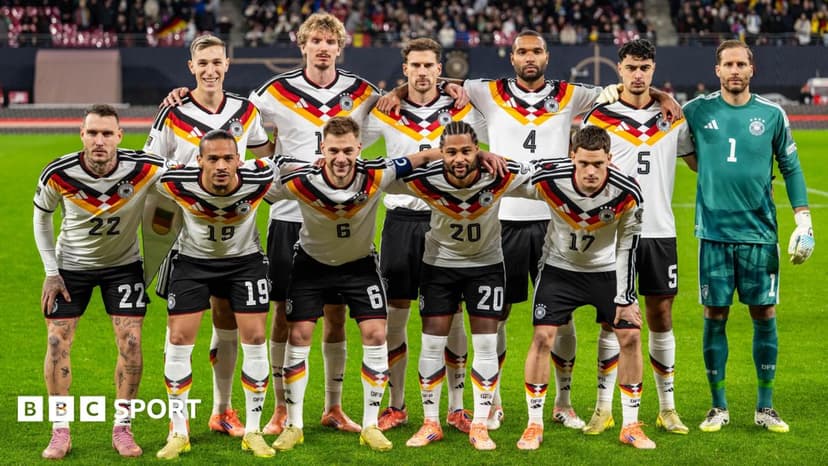
Bayern, as always, have a strong German core, and will have the likes of Jamal Musiala and Manuel Neuer eyeing the decider. England captain Harry Kane, French pair Michael Olise and Upemecano, Josip Stanisic of Croatia, and Canada's posterboy Alphonso Davies will all bear hopes of going deep into the tournament.
Only time will tell if Inter and Bayern will continue to rule the roost, or if this incredible streak will finally come to an end in North America.
Sources: FIFA Official