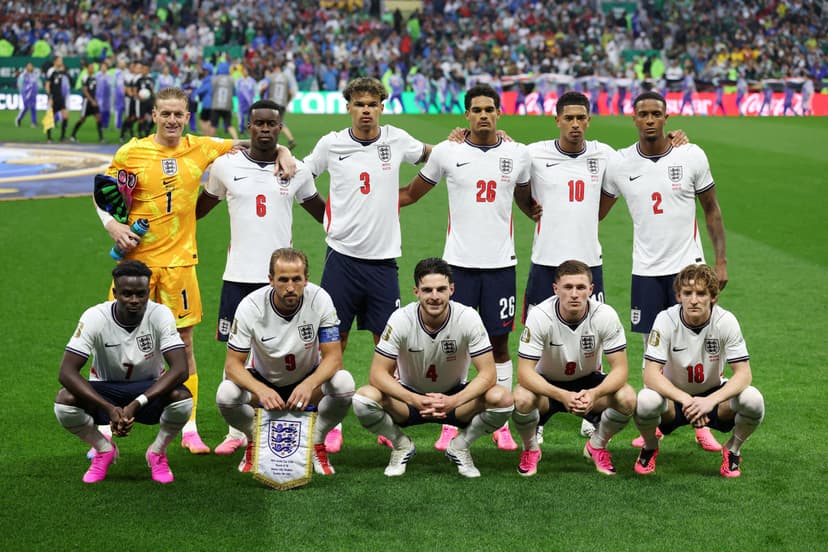
Reaching a FIFA World Cup™ semi-final would ordinarily provide reason for unrestrained celebration. But after England at Miami Stadium to set up a , Three Lions coach Thomas Tuchel was far from impressed by the manner of his side’s progress.
After watching his team come from behind for the second time in the knockout stage thanks to a brace from , Tuchel caught many off guard with his post-match comments.
”The result is fantastic,” Tuchel said. “We are in the last four. It's amazing. But I'm not happy with the performance. In every sense. The commitment is there but we made life very, very difficult for ourselves in the way we played, how we played: sloppy, a lot of technical mistakes, not fast enough, not repetitive enough. We were lucky today.”
Tuchel also acknowledged the spirit and resilience his players had shown but his central message was crystal clear: England must play significantly better if they are to overcome Argentina.
It was not the first time during the tournament that Tuchel has separated England’s mentality from their performance. After their dramatic Round-of-16 , he praised a “heroic” collective effort but said “there is still a disconnect from us and the best version of us that I see.”
The former Chelsea and Borussia Dortmund coach’s refusal to let success create comfort has long been a feature of his coaching, with quarter-final match-winner Bellingham among those to experience Tuchel’s 'tough love'.
Bellingham has enjoyed a sensational tournament for the Three Lions, scoring six goals to match the output of captain Harry Kane. Ahead of the World Cup, though, Tuchel resisted the opportunity to establish the Real Madrid midfielder as his first-choice No10.
The England coach insisted time and again that Bellingham was in a fight with Morgan Rogers for a starting berth – stressing that reputation would not determine his starting XI and challenging Bellingham over how he channelled his emotion on the pitch.
Heading into the World Cup opener against Croatia, there was still doubt as to whether Bellingham or Rogers it would be offered the chance at No10. In the end, Bellingham was given the nod and the response has been emphatic, culminating in his match-winning turn against Norway. It was all, it seems, part of Tuchel’s motivational masterplan.
Tuchel has a history of this approach in English football. Many of his Chelsea players encountered similar challenges during a 20-month spell at the Stamford Bridge helm – a period in which he delivered the Blues their second UEFA Champions League trophy.
Perhaps the clearest example came shortly after Tuchel’s arrival at Chelsea in January 2021. Callum Hudson-Odoi was introduced at half-time in a Premier League game against Southampton but substituted again after only 31 minutes. Tuchel did not disguise the reason, saying at the time: “I was not happy with his attitude, energy and counter-pressing. We demand 100 per cent.”
It appeared a severe public rebuke, but Tuchel’s next words revealed an equally important element of his approach. “Tomorrow it is forgotten,” he added, saying Hudson-Odoi still had every possibility of starting Chelsea’s next match against Atletico Madrid in the UEFA Champions League. Three days later, Hudson-Odoi was restored to the starting XI as Chelsea earned an important victory.
Kai Havertz also experienced Tuchel’s desire to squeeze every ounce of ability from his players. The German tactician consistently expressed belief in his compatriot’s quality during a difficult first season in English football, but also attempted to push him to reach high standards. After Havertz shone in a 4-1 victory over Crystal Palace in April 2021, Tuchel said: “He needs to show up and show up and show up. This is life as an offensive player at Chelsea.”
A few weeks later, Havertz scored the only goal of the UEFA Champions League final as Chelsea defeated Manchester City in Porto.
England now face a comparable demand. Reaching the last four represents a major achievement, particularly after another exhausting contest; England have twice needed to come from behind to win in the knockout stage, with the and Norway sandwiching a tough encounter with Mexico in which the Three Lions played much of the second half with ten men.
Tuchel’s players may not always agree with his assessments but he rarely appears troubled by that resistance – namely because his record speaks for itself. With 11 major trophies won across spells with Dortmund, Chelsea, Paris Saint-Germain and Bayern Munich, Tuchel now has his eyes on the biggest prize in football. Argentina stand in England’s way first in the semi-final, and the Three Lions’ coach will expect a response to his public rallying cry.
Sources: FIFA Official