FIFA World Cup 2026 final takes place on Sunday 19 July
Showpiece will be hosted by New York New Jersey
FIFA.com reflects on most memorable Finals in tournament's history
The FIFA World Cup 26™ final is now just days away.
As excitement builds for Sunday's eagerly anticipated showpiece, we reflect on some of the greatest finals in the competition's illustrious history.
Technically speaking, not a Final but the last match of the four-team final phase and a game Brazil only needed to draw to lift the Trophy. The match should have been remembered for Uruguay’s achievement in winning the World Cup for a second time – 20 years after triumphing at the inaugural world finals – at a Maracana packed with 200,000 home fans. Instead, however, it has gone down in history as a Brazilian trauma, not just for A Seleçao but the whole country. “Brazil is Dead” announced the daily newspaper Mundo in dramatic fashion, though there was some truth in it: two fans threw themselves from the stands and three succumbed to heart attacks.
On the pitch, the Uruguayans were not so much assassins of a dream but footballing heroes, chief among them Juan Schiaffino and Alcides Ghiggia, La Celeste’s scorers on the day. Their goals had turned around a match that Brazil led 1-0 courtesy of Friaca. Miles away from the stadium, his ear glued to the radio, a nine-year-old boy saw his father burst into tears on the final whistle, and offered him these consoling words: “Don’t cry, Daddy. I’m going to win it, the World Cup, for you.” His name? Edson Arantes Do Nascimento, a.k.a. Pele.
The question on everyone’s lips when the Final of Switzerland 1954 kicked off was not if Hungary would win but how many they would win by. Thanks to the myriad talents of Ferenc Puskas, Zoltan Czibor, Nandor Hidegkuti and Sandor Kocsis, the Magyars had gone unbeaten for more than four years and had thrashed Final opponents West Germany 8-3 in the first round. With the rain falling hard in the Swiss capital of Berne, the stage seemed set for another day to forget for the Germans, an impression that appeared to be confirmed when Puskas and Czibor scored in the opening eight minutes.
Yet instead of wilting, the Germans fought back straightaway, with Fritz Walter proving inspirational. Within just ten minutes they were level and brimming with confidence, though only the woodwork – on two occasions – and a disallowed goal for Puskas stopped the Hungarians from retaking the lead. With six minutes remaining, the Germans broke the siege on their goal and launched a counter-attack that ended with Helmut Rahn firing a shot across Gyula Grosics and into the back of the net. The invincible Magyars had been toppled, as the Germans claimed the first of their four world titles to date.
Playing in front of their own fans and their most illustrious supporter in Queen Elizabeth II, England were in a similar position to the one Brazil had found themselves in 1950, with a World Cup to be won on home soil, at Wembley. Though determined to avoid a Maracanazo of their own, they were facing the West Germans, who enjoyed upsetting the odds, as they showed against Hungary in 1954.
Wolfgang Weber deprived the hosts of the Trophy in normal time, scoring in the last minute to make it 2-2. A goalscorer in the regulation 90 minutes, Geoff Hurst struck twice more in extra time, the first of those two goals the most controversial in World Cup Final history: a powerful drive that hit the underside of the crossbar and bounced on the goal-line – according to the Germans – or just over it – according to the English and, crucially, the Soviet linesman. Victory gave England their only world title to date, while Hurst became the first player to score a hat-trick in the Final.
In the eyes of many, A Seleçao’s defeat of La Squadra Azzurra in Mexico was the crowning achievement of the greatest team in history at the greatest World Cup of all time. Tied on two world titles with the Italians going into the game, Brazil became the first country to win three after a match lit up by Pele’s individual brilliance and some collective Canarinha magic. O Rei scored with a header and Jairzinho and Gerson both got on the scoresheet before Carlos Alberto, latching on to a sublime pass from Pele, rounded off a wondrous move to put Brazil on top of the world. Italy defender Tarcisio Burgnich, the man who had the unfortunate job of marking Pele that day, later commented: “I said to myself before the match: ‘He’s just flesh and bone, like anyone else.’ But I was wrong.”
When the World Cup returned to Mexico in 1986, another classic tournament ensued, capped by a gripping decider. Inspired by a Diego Maradona at the peak of his powers, Argentina stormed into the Final. Waiting for them there were a West Germany side anxious to atone for their defeat in the Final at Spain 1982. The 115,000 capacity crowd at the Azteca Stadium saw the South Americans take a two-goal lead, only for the tenacious Germans to prove their expertise in putting the champagne back on ice, with Karl-Heinz Rummenigge and Rudi Voller both striking in the space of seven minutes late on.
With just six minutes remaining, Maradona conjured up one more piece of genius to flick a perfect pass into the path of Jorge Burruchaga, who strode away from the German defence and slid the ball past Harald Schumacher. The 3-2 win gave La Albiceleste their second world crown and ensured eternal glory for their peerless No10.
Staging the World Cup for the second time, France reached their first Final, against four-time champions and hot favourites Brazil no less. Denied the services of the suspended Laurent Blanc, Les Bleus could have been forgiven for feeling apprehensive, especially with the likes of Ronaldo, Rivaldo, Cafu, Bebeto and Roberto Carlos lining up against them. Nevertheless, coach Aime Jacquet won the tactical battle against opposite number Mario Zagallo, and Zinedine Zidane was at his imperious best. Thanks to his brace and a late goal from Emmanuel Petit – when they were down to ten men – Les Bleus finally achieved their moment of glory.
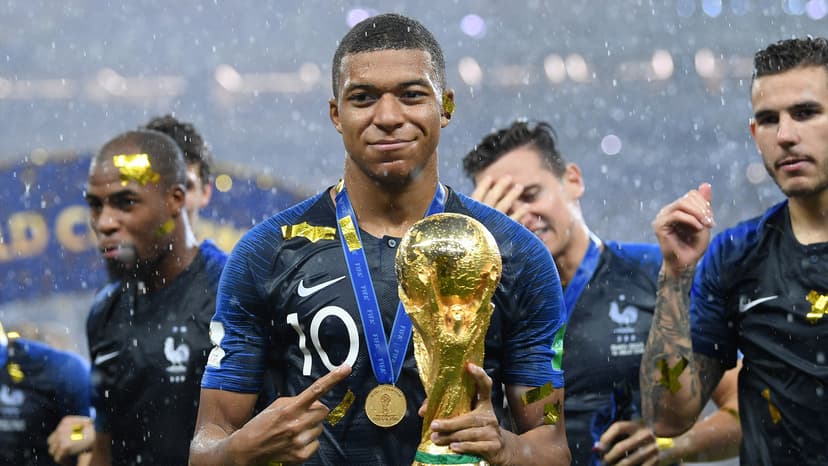
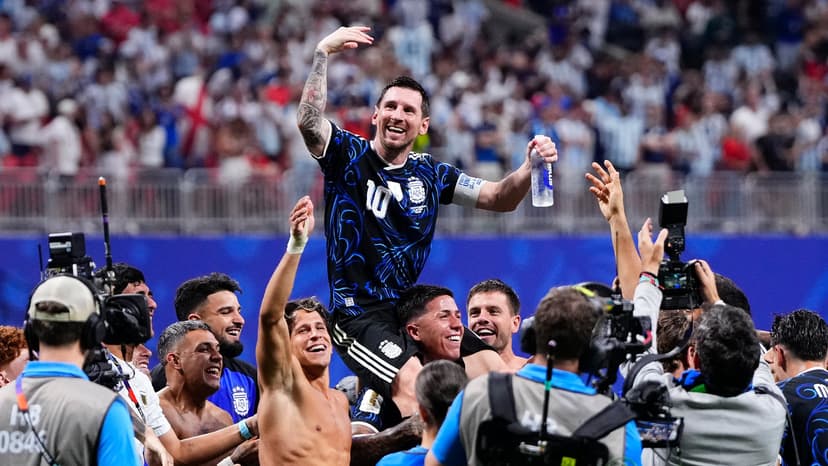
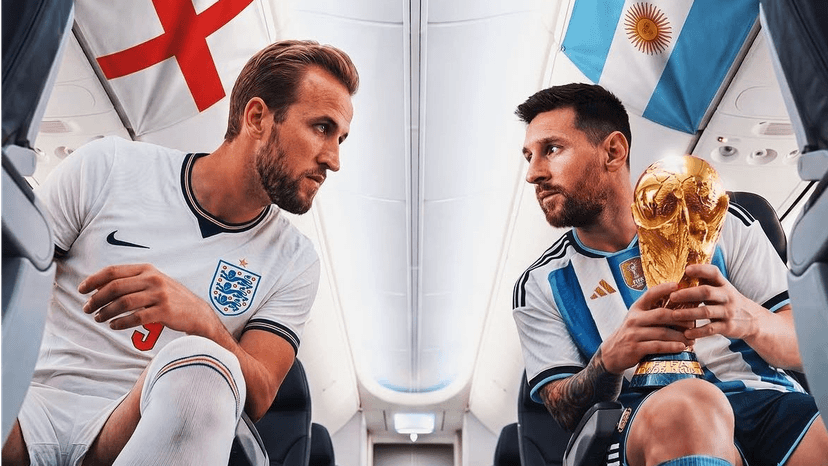
The most recent Final was perhaps the most dramatic of all time, with Argentina eventually prevailing on penalties after a pulsating clash with France.
La Albiceleste, led by inspirational captain Lionel Messi, appeared on course for a relatively routine victory when they led 2-0 with just 10 minutes remaining. France superstar Kylian Mbappe had other ideas, though, and struck a quickfire double to send the match to extra time. What unfolded in those additional 30 minutes was extraordinary, with Messi scoring his second goal of the game to put Argentina back in front, before Mbappe fired in a penalty to equalise and become only the second man to score a World Cup Final hat-trick. Both teams had chances to win it in the dying moments of extra time but a pulsating contest would be decided by spot-kicks. Argentina defender Gonzalo Montiel emerged as the hero in the shootout, slotting home the decisive penalty to secure his nation’s first global crown since 1986.
29 June 1958: A 17-year-old Pele scored twice as Brazil beat Sweden to win their first World Cup.
7 July 1974: Spearheaded by Gerd Muller and Franz Beckenbauer, West Germany came from behind to beat a Netherlands side led by Johan Cruyff. The Dutch had taken the lead after just two minutes, without the Germans having touched the ball.
11 July 1982: Paolo Rossi was on the scoresheet again and Marco Tardelli celebrated in memorable style as Italy eased to victory over West Germany.
30 June 2002: Ronaldo helped himself to a brace as Brazil cruised to a fifth world crown, the striker having recovered from a string of injuries just a few months before the tournament. Skipper Cafu became the first player ever to appear in three consecutive World Cup Finals.
9 July 2006: Zidane scored from the spot with a Panenka before Marco Materazzi equalised from a corner. The two had a disagreement deep into extra time, with the Frenchman sent off for headbutting the Italian. Italy edged a tight, suspenseful Final on penalties.
11 July 2010: With four minutes of extra time remaining, Andres Iniesta scored the goal that sank Netherlands and gave Spain their first World Cup win, as tiki taka cemented its domination of the global game.
Sources: FIFA Official