Johan Neeskens of the Netherlands scored the fastest goal in a World Cup final after just 88 seconds in 1974 – before opponents West Germany had even touched the ball. The Netherlands kicked off and put 16 passes together until the ball arrived at the feet of Johan Cruyff, who befuddled Berti Vogts and Uli Hoeness to earn the first-ever spot-kick in the fixture, which Neeskens netted. The first World Cup final penalty may have taken 44 years to be awarded, but the second merely took another 23 minutes, with Paul Breitner converting it to help Helmut Schon’s side to victory.
It incredibly took 60 years for a team to keep a clean sheet in a World Cup final. After 24 teams had tried and failed, West Germany became the first in a 1-0 win over Argentina in 1990. The man who kept it, 23-year-old Bodo Illgner, remains the youngest goalkeeper to have played in global football’s showpiece match. His opposite number in the semi-finals, England’s Peter Shilton, had made his top-flight debut for Leicester City one year before Illgner was even born! As it turned out, West Germany’s shutout started a sequence of seven clean sheets in seven finals.
Spain ended a run of 44 years without a nation winning a World Cup final in their second-choice shirts in 2010. After England beat West Germany in red in 1966, West Germany had lost to Argentina in green in ’86, Argentina had fallen to West Germany in dark-blue four years later and France had been overcome by Italy in white in 2006.
West Germany’s stunning, come-from-behind victory in the 1954 final ended Hungary’s 30-game unbeaten run, which remained a world record until Diego Simeone, Fernando Redondo and Gabriel Batistuta helped Argentina break it almost 40 years later. The Magical Magyars had thrashed the West Germans 8-3 in the group stage and were 2-0 up within eight minutes, but Sepp Herberger’s side recovered to win 3-2. It remains the only time a team has recovered a two-goal deficit to win a World Cup final, with France threatening to do so against Argentina at Qatar 2022 but ultimately losing on penalties.
Twenty-two years was the mammoth age difference between Italy team-mates Giuseppe Bergomi and Dino Zoff, who were 18 and 40 respectively in the 1982 decider. The next-biggest difference between starters from a World Cup final-winning side was the 15 years and five months between Pele and Nilton Santos in 1958. By contrast, there were only four years and five months between France’s youngest and oldest starters – Zinedine Zidane and Frank Leboeuf – in 1998.
Martin Peters and Geoff Hurst, the men who scored England’s four goals in the 1966 final, had eight caps between them going into the tournament. The scorers of Brazil’s four goals in the next World Cup decider carried 220 caps into Mexico 1970.
Seven sides have recorded comeback victories in the World Cup final. Six came in its first seven instalments, pulled off by Uruguay against Argentina in 1930, Italy against Czechoslovakia in 1934, West Germany against Hungary in 1954, Brazil against Sweden in 1958 and Czechoslovakia in 1962, and England against West Germany in 1966. Uruguay also came from behind to beat Brazil and lift the trophy in 1950, though it was not an official final. The last team to recover a deficit and win a final was West Germany against the Netherlands 52 years ago. Italy didn’t manage to rally from behind and clinch victory in 2006, but they did become champions on penalties.
Five players who started the 1958 final for Brazil had not begun their curtain-raiser against Austria – the biggest difference between a World Cup-winning side's XIs for their opening and concluding matches. Djalma Santos, Zito, Garrincha, Pele and Vava were those who were promoted during the tournament. In the final, 35-year-old Nils Liedholm became the oldest marksman in a World Cup final, while Pele, at 17, became its youngest. Brazil’s 5-2 victory over Sweden remains the highest-scoring decider ever in the competition.
Kylian Mbappe has scored an unparalleled four goals in the fixture, while Geoff Hurst, Vava, Pele and Zinedine Zidane have three apiece. Mbappe got one goal in 2018 and a hat-trick in 2022. His last goal for France at Lusail Stadium, in the 118th minute, is the latest goal registered in a final.
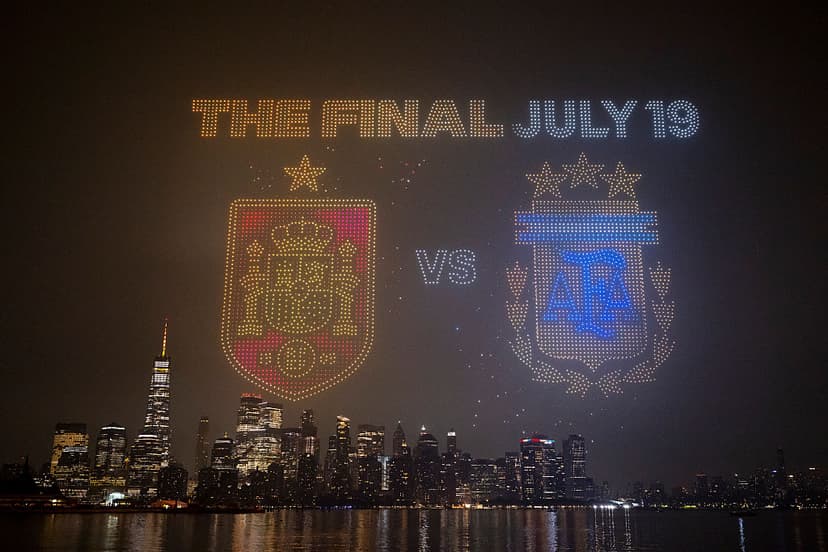
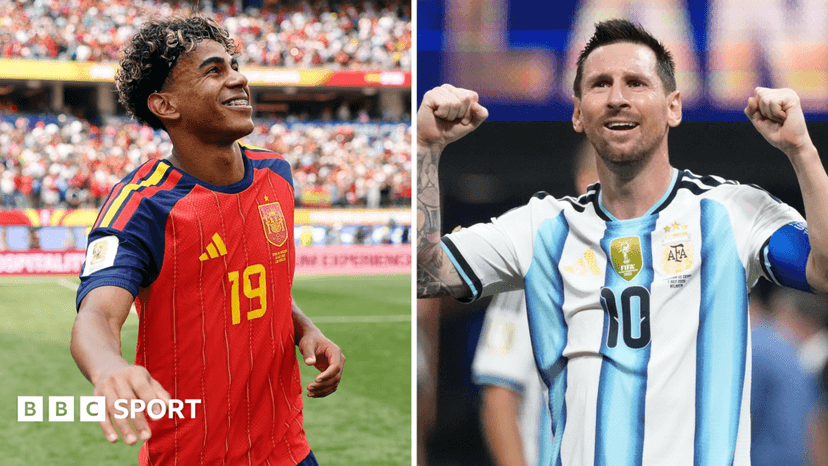
Cafu is the only man to have played in three World Cup finals. ‘The Express Train’ came on for an injured Jorginho in the first half against Italy in 1994, competed against France in 1998 and captained the side against Germany in 2002. Pele won a record three World Cups but didn’t play in the 1962 decider due to injury. Lionel Messi, who appeared against Germany in 2014 and France in 2022, will emulate Cafu when he represents Argentina against Spain.
Vava (1958 and 1962), Pele (1958 and 1970), Paul Breitner (1974 and 1982), Zinedine Zidane (1998 and 2006) and Kylian Mbappe (2018 and 2022) are the only men to have scored in two World Cup finals.
Luis Monti is the only player to have appeared in the World Cup final for two different nations. The midfield hardman played for Argentina, his country of birth, against Uruguay in 1930, and for Italy against Czechoslovakia in 1934. In the latter, for the only time ever, Giampiero Combi and Frantisek Planicka ensured both teams were captained by goalkeepers.
Sources: FIFA Official