The Match
If any match encapsulated why the World Cup remains football's greatest competition, it was Iran versus New Zealand at SoFi Stadium in Los Angeles on June 16. Before a crowd of 70,108 in the scorching California sun, Amir Ghalenoei's Team Melli twice fell behind and twice clawed themselves level to earn a 2-2 draw in a match that left the stadium — and millions of viewers worldwide — breathless. This was not the performance of a team content to defend and escape with a point; this was the display of a squad with genuine belief in their own quality and the mental fortitude to impose themselves when the moment demanded it.
Elijah Just gave New Zealand a seventh-minute lead that seemed to come against the run of play, drilling home after a sharp incisive move. Iran were unsettled but responded well, pressing high and creating combinations around New Zealand's midfield until Ramin Rezaeian drove home a low effort just before the half-hour mark to restore parity. The second half produced another Just strike — this time after a clever combination with Chris Wood — that threatened to end Iran's tournament ambitions early. But with 64 minutes played, Mohammad Mohebbi produced a moment of pure athleticism, rising at the back post to meet a cross and plant a powerful header beyond the helpless goalkeeper. The final whistle brought jubilation from the Iranian camp and a sense of deflation from New Zealand, who had twice been on the verge of a historic first World Cup win.
Standout Performers
Ramin Rezaeian was Iran's most dynamic performer for large portions of the match, breaking forward from right-back with timing and conviction and delivering the first equalising goal with a technically polished finish. His ability to contribute at both ends of the pitch gave Iran an extra dimension in transition that New Zealand struggled to account for. Mohammad Mohebbi's headed goal was the defining moment of his international career — a 64th-minute intervention that saved Iran's tournament from an early crisis. The striker's movement throughout the second half was intelligent and physical, occupying the New Zealand central defenders and creating space for those around him.
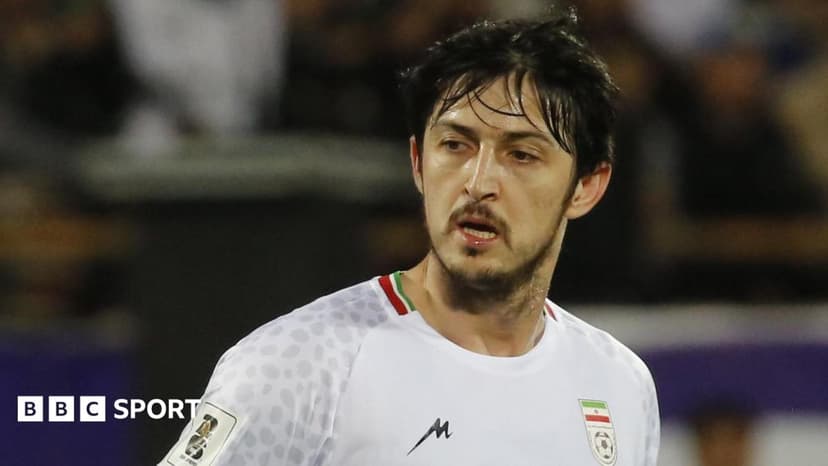
Sardar Azmoun, one of Iran's most experienced forwards, was a persistent thorn in New Zealand's side throughout — combining well, holding the ball up under pressure, and creating a moment of chaos that eventually led to the equaliser. His partnership with Mohebbi gave Iran a striking unit that no Group G opponent will relish facing.
Tactical Picture
Ghalenoei deployed a 4-3-3 that pressed aggressively in the first half and was rewarded with the equaliser before the break. After falling behind in the second half, Iran showed tactical flexibility, pushing the fullbacks forward and committing more bodies into the attack — a bold call with the outcome still uncertain. The introduction of additional forward energy paid off with Mohebbi's equaliser. The concern for the coaching staff will be Iran's defensive vulnerability at the back — conceding twice to New Zealand, who were considered the group's weakest side, is a warning that must be heeded.
Group Implications
Iran sit on one point in Group G after the opening round, alongside Belgium and Egypt, who also drew 1-1. New Zealand share the same tally. The group is perfectly balanced after matchday one — no side has more than a point, no side is eliminated, and the permutations ahead of matchday two are numerous. Iran, with the individual quality in Azmoun, Rezaeian, and Mohebbi, will believe they can take the next step and secure a victory that could prove decisive for their group-stage advancement.
One to Watch Next
Mohammad Mohebbi is the name to circle for Iran's next fixture. His equalising header against New Zealand demonstrated a striker at the peak of his powers — composed under pressure, clinical in execution, and entirely capable of delivering when the stakes are highest. If Ghalenoei can develop the combination between Mohebbi and Azmoun further while tightening the defensive shape that was exploited twice, Iran have the tools to make a genuine run at progression from this group. The talent is clearly there; the margin for defensive error is not.