It was not the match France or England supporters had expected. Few, if any, though could have predicted the drama, or the final score, that unfolded in the bronze final. England led 4-0 at half-time and, after a furious French fightback, eventually prevailed 6-4 in a result unlike any previously seen at the FIFA World Cup™.
For France, the immediate feeling was one of frustration. They had allowed the first half to slip away completely, and the damage might have been even greater before the interval.
“In the first half, we lacked desire,” Adrien Rabiot admitted to FIFA. “There had been a lot of talk after the semi-final defeat, only for us to produce a first half like that? It was unacceptable. Those are not the standards expected when you wear this shirt. After that, we showed a different side in the second half.”
That different side arrived with force. Inspired by the four changes made by Didier Deschamps at the break, France won the second half 4-2 and twice hauled themselves back to within one goal, first at 4-3 and then at 5-4. The mountain ultimately proved too steep to climb, but Les Bleus could still leave with pride restored, if not medals around their necks.
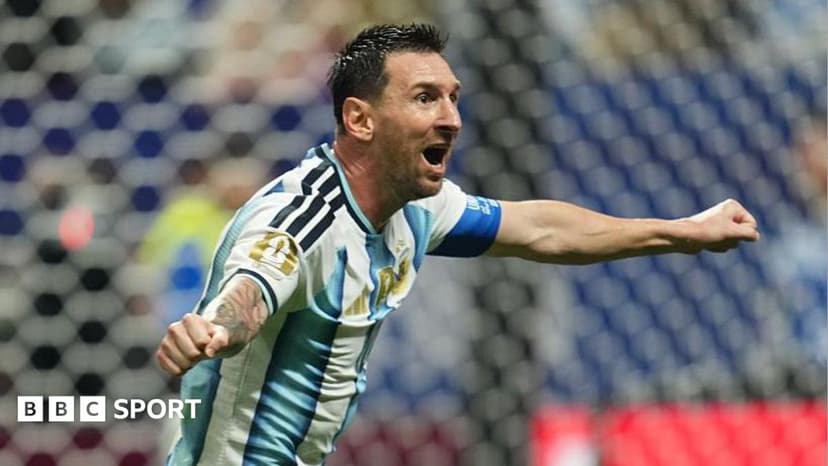
Kylian Mbappe, one of the few France players to find his rhythm before the break, was ultimately rewarded with another FIFA World Cup™ brace and an assist for Bradley Barcola. It took him above Argentina’s Lionel Messi in the race for the and, more significantly, made him the .
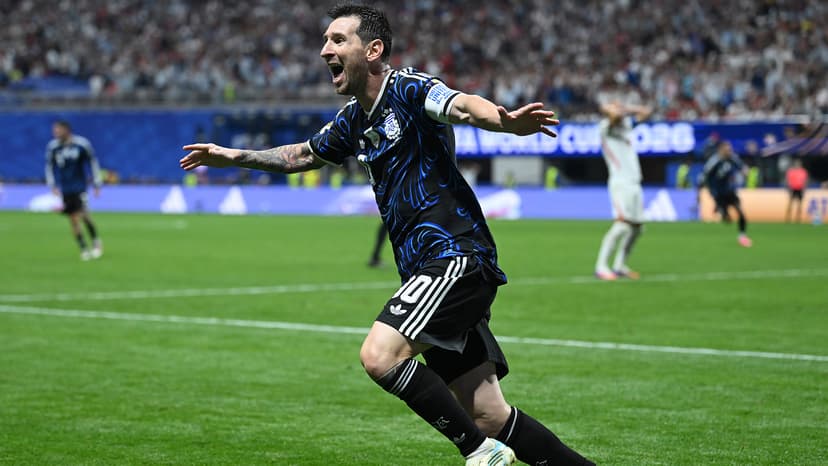
“The FIFA World Cup™ Golden Boot? Leo [Messi] always finds the net. Tomorrow, he’ll score, for sure,” France’s No10 said after the clash. “I just try to help my team every match. Scoring that many World Cup goals naturally places you in a different category. But I would have preferred not to be the top scorer and to play in the final. It’s good for my legacy, once I’ve retired, but today that’s not what’s on my mind.”
Messi still has the opportunity to respond. To claim the , awarded to the World Cup’s leading scorer, for the first time in his career, he must score at least twice and provide an assist . If he does not, Mbappe will become the first player ever to win the prize twice, and in successive tournaments.
Olise provided the other major storyline of the bronze final. Still unfortunate in front of goal, having not found the net in North America, the Bayern Munich forward rediscovered the creativity that had lit up his tournament, supplying two superb second-half assists for Mbappe. By setting up seven goals in eight matches, he surpassed the great Pele, who had established the previous benchmark with six assists in six games at Mexico 1970.
“Michael had a great tournament, Kylian too, and we know we can score at any moment,” Dayot Upamecano told FIFA, before focusing on Olise. “Michael is a top player. I play with him at club level, so I know how hard he works. People often see him as nonchalant, but he is very focused and always looking to improve. He's a hard worker, and I’m very happy to play alongside him for France. His future is very bright because he's prepared to put the work in.”
France’s class of 2026 leave North America without the collective reward they had targeted, but individual honours may yet follow. Mbappe remains in a strong position to claim the adidas Golden Boot if Messi does not rewrite the standings in the final, while Olise is set to end the tournament as its leading creator. For both players, and for Les Bleus, the focus will soon shift to building a new collective story, and chasing another medal, at the FIFA World Cup 2030™.
Sources: FIFA Official