Mexico is planning to increase the police and security presence around Zócalo plaza in Mexico City to ensure the World Cup fan festival can go ahead amid growing social unrest and public protests.
Much of the city’s historic centre, including the Catedral Metropolitana and the Aztec ruin Templo Mayor, is locked down, but the government of President Claudia Sheinbaum is adamant Zócalo will remain open throughout the tournament.
Local reports have claimed that a crowd of up to 100,000 is expected at the official fan festival when Mexico kicks off the World Cup against South Africa at the Azteca Stadium on Thursday, raising security concerns in a city that is in the grip of a wide range of protests.
Teachers, judges, animal rights activists and families of Mexico’s 130,000 missing people are among the disaffected groups that have staged protests in the co-hosts’capital this week.
Teachers from the CNTE union demanding better working conditions brought traffic to a standstill on Friday, while other groups broke into government buildings and staged a football match on a blockaded street.
Earlier in the week, riot police fired teargas at a group of demonstrating teachers who had broken through one of the metal barriers blocking off the Zócalo while the fan festival arena was being constructed.
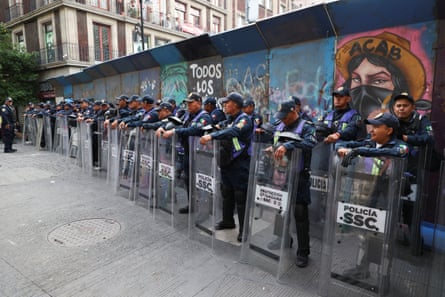
View image in fullscreen Police officers stand guard near the Zócalo fan zone, where dissident teachers have set up an encampment to demand higher wages. Photograph: Luis Cortés/Reuters Teachers unions have called for the fan fest to be suspended, with Pedro Hernandez Morales of CNTE telling Al Jazeera that “the ball will not roll” if their demands are not met, but the government is refusing to back down.
Sheinbaum’s administration has come under criticism by activist groups for prioritising the World Cup over social needs, such as addressing a cost-of-living crisis fuelled in part by foreign tourism. The protests are expected to continue throughout the World Cup.
Sheinbaum is planning to watch the opening game at the Zócalo fan festival after giving away her ticket for the game to Yolett Cervantes Cuaquehua, a 21-year-old Indigenous woman from the eastern state of Veracruz.
Sources: The Guardian