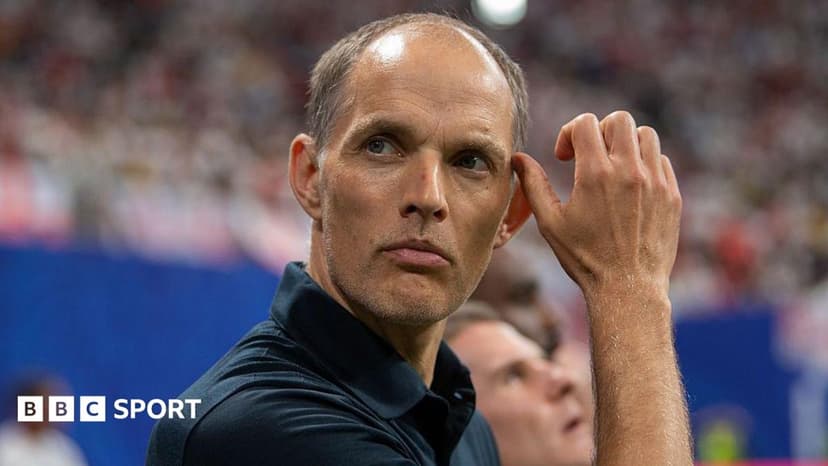
Roberto Martinez is widely regarded as one of the top coaches at the . He guided Belgium to the bronze medal in 2018 – their best-ever finish – before taking charge of in 2023. The Seleção das Quinas lifted the UEFA Nations League in 2025 and have already reached the round of 16 at this edition of the global showpiece. On Monday, in a repeat of their round-of-16 meeting in 2010, a fixture that carries special significance for Martinez as he prepares to come up against his country of birth.
Martinez was born in 1973 in Balaguer, a Catalan town of fewer than 20,000 inhabitants around two hours from Barcelona. His mother, Amor, and his father, Roberto, met at La Rosaleda, the town’s dance hall. Roberto Sr, who sadly passed away a few months ago, was a footballer from Zaragoza who settled in Balaguer in pursuit of his passion before opening a shoe shop called Calzados Roberto.
The couple went on to have two children, Antonieta and Roberto. “Roberto was mad about football,” Andreu Martinez, a friend and neighbour of the Portugal coach, told FIFA. “He always had a ball tucked under his arm and he’d have a kickabout with his father at half-time of any match.”
At the age of 16, Martinez left his family and friends to follow in his father’s footsteps by joining the Real Zaragoza academy. He made his top-flight debut on 20 May 1993 in a 2-2 draw away to Atletico Madrid. The occasion was celebrated throughout Balaguer. Martinez followed in the footsteps of another local trailblazer, Antoni Torres, who made 483 appearances for Barcelona between 1965 and 1976.
When his Zaragoza contract expired in 1994, Martinez returned home to Balaguer. He went through pre-season hoping to join another club in Spain’s third tier and had trials with teams including Figueres but was unable to secure a move. “He was a midfielder who covered an incredible amount of ground,” recalled Andreu Martinez. “Sometimes it drove me mad because I was a centre-back and he’d come looking for the ball from me. I’d get annoyed and tell him to let me play a bit.”
The young Martinez was a natural choice as captain. “He was only 20 or 21, but you could already see what a great leader he was on the pitch,” said Toni Menchon, two years Martinez’s junior. He would often come over to the touchline during matches to discuss tactical alternatives with the coach. Menchon first played alongside Martinez in their school’s futsal team before they became team-mates again in 1994-95 at Balaguer.
“It was difficult at the beginning,“ added Menchon. “Small towns can be tough at times. People talked about him all the time and it felt as though he was expected to win matches single-handedly. There was a heap of pressure on him. We finished the season really well, though. If it had gone on a little longer, we’d have reached the play-offs.”
Balaguer also reached the final of the Copa Federacion, the equivalent of the Copa del Rey for more modest clubs, before losing to Las Palmas’ reserves. In the Canary Islanders’ ranks was Juan Carlos Valeron, the Deportivo legend who went on to represent Spain at the 2002 World Cup.
During that same season, Martinez also coached Balaguer’s U-10 side, all of whom were amazed to be working with him. “He was our idol and a superstar,” admitted Jordi Ariet, who played in that same team. Ariet still has the gift that Martinez gave every player at the end‑of‑season lunch: a black-and-white photograph of each boy. It may well have been the first team Martinez coached and the only one in Spain to date.
In summer 1995, Martinez joined fourth-tier English side Wigan Athletic alongside two friends from Zaragoza’s reserve team. They became pioneers as they were among the first Spanish footballers to forge a path to England. Nicknamed The Three Amigos after a film about three Mexicans, they even posed for photographs wearing Mexican sombreros.
Martinez subsequently told AS about the whole move: “It was like being given tickets to the moon. We knew absolutely nothing about Wigan and very little about the Premier League, let alone the lower divisions. The Mexican sombreros were simply a gaffe by the press officer. He thought that because we were Spanish, it would be a good idea.”
Martinez went on to become a Wigan legend. He was voted the Player of the Year in his first campaign and was later recognised as the greatest footballer in the club’s history. The Spaniard returned as head coach in 2009 and led Wigan to one of the most remarkable achievements in modern English football when the underdogs defeated Manchester City to clinch the FA Cup in 2013, overcoming a star-studded team featuring David Silva, Yaya Toure, Sergio Aguero and Carlos Tevez.
Martinez later managed Everton and Belgium before taking 's reins in 2023. Although he has achieved success far from home, his roots remain as strong as ever. He still loves eating snails, one of the traditional dishes in his native region, and when he was named Balaguer’s adopted son in 2018, he went out for a celebratory dinner with his former team-mates from 1994-95.
A giant screen was erected in Balaguer’s main square for Belgium’s narrow semi-final defeat at the hands of France in 2018. On Monday, as Portugal take on La Roja, Martinez’s home town will once again have divided loyalties.
Sources: FIFA Official