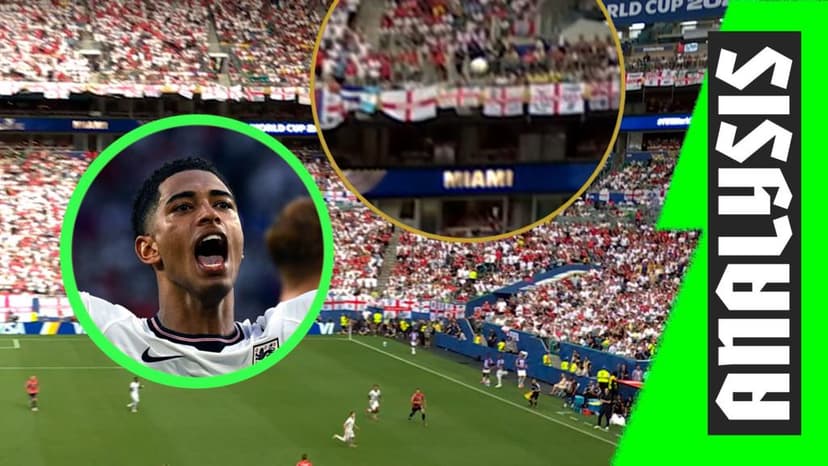
To book a spot in the semi-finals, England pulled off something in Miami this Saturday that no defence had even come close to achieving: nullifying Erling Haaland. In a 2–1 victory after extra time, the hero was Jude Bellingham, who netted both goals to complete the turnaround.
The striker, who had terrorised four straight opponents – bagging seven goals against Iraq, Senegal, Côte d'Ivoire, and Brazil – was kept quiet for the first time in the tournament, and the impact was immediate. That was how Norway’s challenge crumbled.
He departed the fray exhausted before the final whistle, at the end of the first period of extra time. For most elite players, after suffering defeat from a winning position, and elimination in the quarter-finals, the natural instinct might be to retreat into silent reflection. Not Haaland. He grabbed a post-match interview microphone and bade farewell to his first World Cup with a smile.
“These things are surreal; I think this has changed me as a person,” he said. “I think my profile has grown a bit, let’s put it that way, and... It’s hard to even process it all right now when I look back at the games, but it’s incredibly special to be part of an event like this – something I used to watch from the sidelines, and now I’m living it first-hand.
"I feel immense pride, and I’m genuinely moved when I think about how well we performed, the sense of unity back in Norway, and the positivity and joy we’ve felt both there and here.”
Dealing with a striker like Haaland is never (or at least shouldn’t be) a one-man job. It’s not just his physical prowess that makes him so difficult to handle, but his lethal knack for deciding matches while barely touching the ball.
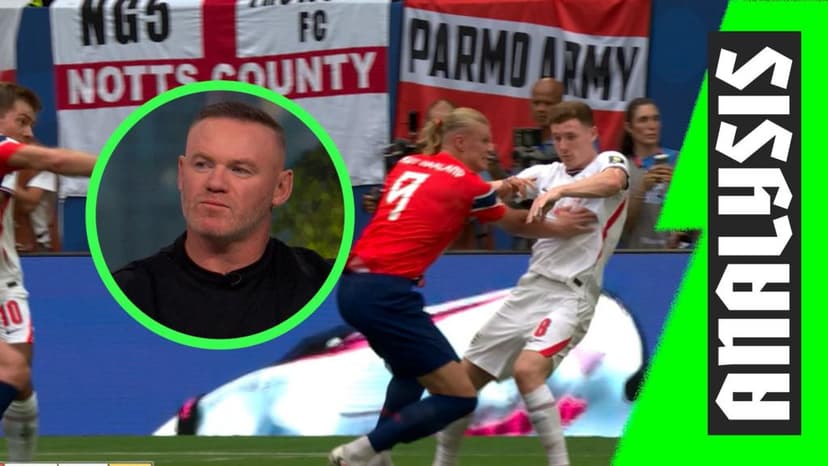
It demands the full attention of the backline. You have to anticipate his movement and seal off the pockets of space where he’s so deadly. And that is exactly what the England side managed to achieve. At the heart of that collective effort, the spotlight falls squarely on Marc Guehi and John Stones. Haaland’s Manchester City teammates turned their familiarity with him into a distinct tactical advantage.
Against England, when subbed off during the interval in extra time, Haaland left the pitch drained with the following numbers: two shots on target, nine attempted passes, with seven completed. He had covered 8.9 kilometres.
Contrast that with his stats from the historic last-16 win over Brazil: four shots, 11 passes (all of them completed), and 10.1 kilometres covered.
They look fairly similar on paper, don't they? But giving Haaland those extra two chances could well have been the difference that saw Brazil knocked out. In the quarter-final, the Norwegian giant only managed two headers. One was saved by Jordan Pickford, and the other went wide.
In addition, it’s clear he had significantly more freedom of movement across the pitch, even though he played 15 minutes less and despite his team abandoning the counter-attacking style they used for much of the first half in Miami. For Stones and Guehi, then, it was mission accomplished.
Does this mean Haaland will now be backing his two club-mates and England to go all the way? He gave a wry smile, but admitted it’s not that straightforward. “I’ve got my City teammates here, that’s true. I grew up in England, and the first shirt I ever owned was an England one. It’s a special country. But I have teammates from France and Spain too,” he pointed out.
Amidst the pleasantries and optimism, Haaland’s focus shifted to the future. Speaking like a man who has had a taste of World Cup glory and is hungry for more. “This has been my goal for a long time, and I think after this tournament, we’ve put Norway on the map, so to speak. Now it’s about maintaining those standards. I’m incredibly proud,” he affirmed.
“We proved that it’s possible to beat one of the biggest teams in the world, Brazil. We lost to England in the end, but we made them fight for it. Perhaps it could have gone differently. We’ve got more World Cups and Euros ahead of us; I think it’s time for us to really establish ourselves. We’ve got a fantastic generation.”
Sources: FIFA Official