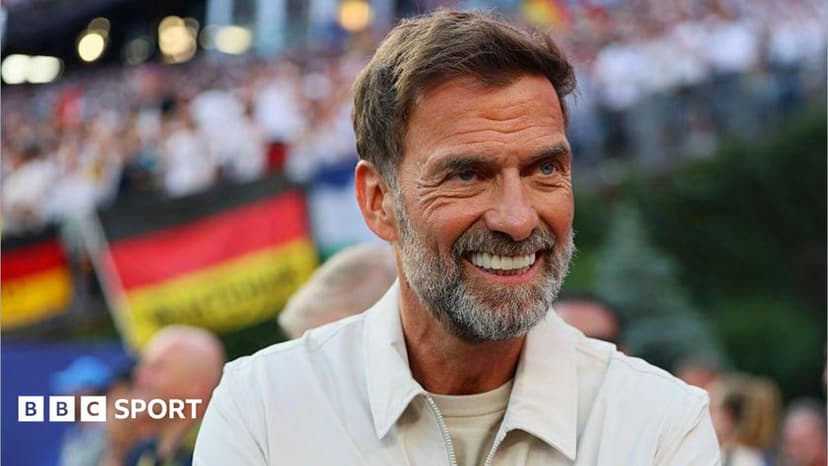
Deschamps has guided France to a third World Cup semi-final
Les Bleus struck after half-time in both knockout rounds
Second-half surges define the coach's era in charge
France racked up an xG of 1.87 in the first half of their quarter-final against Morocco but failed to find the net, with Kylian Mbappe even missing from the penalty spot. Against opponents who had posed little threat to the French goal, Les Bleus might have grown frustrated or started forcing the issue.
Instead, they remained composed. Second-half goals from Mbappé and Ousmane Dembele calmly settled the contest as France .
What was said at half-time is likely to remain behind closed doors in the France dressing room. How the match itself transpired, however, closely mirrored their round-of-16 meeting with Paraguay, when Les Bleus had also gone in goalless at half-time before finding the breakthrough after the interval.
ability to refocus his players – particularly in the heat of the action – has long been among the qualities most frequently praised by both current and former members of his squad.
“He’s easy-going but commands respect,” Raphael Varane told French newspaper Le Parisien in 2019, a year after France’s triumph in Russia. “He thinks carefully before placing his trust in a player but, once he does, that trust is unwavering. We’ve seen that throughout his time in charge. He always demands the same high standards.
“Above all, though, he wants to preserve the positive momentum we worked so hard to build. Sometimes that means a bit of banter, or simply a touch of humour. He always instils that motivation in his players while also giving them a great sense of calm.”
The statistics also highlight France’s ability to change the course of matches after the first half; across the four editions of the FIFA World Cup with Deschamps at the helm, Les Bleus have scored 37 of their 56 goals after half-time.
That trend has grown stronger with each tournament. In North America, France have so far scored five goals before half-time and 11 after the break. More tellingly, several matches have swung France’s way following adjustments made for the second half. That was particularly evident in their opening match against Senegal. Level at the interval, Deschamps' side took control after the break and went on to win 3-1.
“I speak up when I see that there are several areas in which we can improve on our first-half performance,” the coach explained afterwards. “I do not shout as much these days because I have mellowed, but I still tell each player what they need to hear.”
The tactician’s words often have the desired effect. One team talk perhaps sums up the Deschamps method better than any other: the one he delivered during the Qatar 2022™ final. Trailing Argentina 2-0 after a poor first half, his players heard their coach raise his voice without losing the calm that has long characterised his management style.
“Lads, I’m going to tell you this without getting angry. Do you know the difference [between us and them]? They look like they’re playing a World Cup final out there, but we don’t! We need more accurate passing and better decision-making. You’re not compact enough – get closer to one another. You’re not in the game, lads. You’re not winning any of the second balls.”
Captured by the cameras, the exchange has since become one of the most famous half-time team talks in Les Bleus’ history.
The response that followed has earned its own place in World Cup folklore. France fought back from 2-0 down to draw level, then equalised again to make it 3-3 in extra time before eventually losing 4-2 on penalties. That spectacular comeback remains perhaps the clearest example of a Deschamps side’s ability to adapt during a match without ever straying from their game plan.
Managing individual emotions is another key element of the coach’s approach. Against Morocco, Mbappe could easily have allowed his missed penalty to play on his mind. Once again, Deschamps made a point of protecting his captain’s confidence and publicly reaffirming his faith in him.
“We lacked efficiency,” the French tactician admitted after the match. “But that does not sow doubt in my players’ minds, certainly not in Kylian’s.”
Deschamps has made no secret of the importance of experience to his current success, and he has perhaps never appeared more in tune with his squad than in 2026. His understanding of tournament football and how to navigate difficult spells comes as little surprise to those who played alongside Les Bleus’ former captain.
Thierry Henry recently summed up Deschamps’ unique qualities in just a few words on US broadcaster FOX: “It’s not luck – this guy is a serial winner. He has something within him that makes him a natural-born leader. He was going to be the captain, he was going to be the first to win almost everything for France.”
With just two matches remaining in the 14-year tenure of their coach, France may yet need more words of wisdom and tactical adjustments from their leader if they are to and extend their extraordinary North American adventure.
Sources: FIFA Official