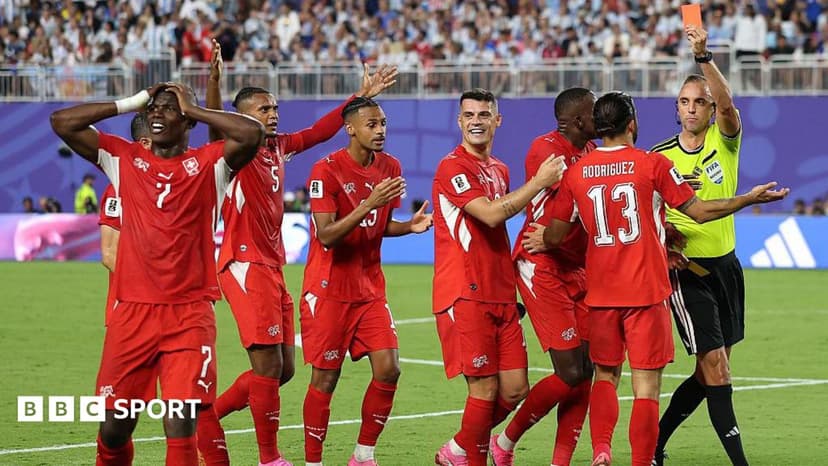
T he final may be Argentina v Spain, but ardent media watchers in the UK know that in broadcasting terms, a World Cup is always a domestic battle between the BBC and ITV. So who won on these important criteria?

Much was made in advance of the BBC’s decision not to head to the US, but instead use a digital studio in Salford to make it look as if its panel was in front of landmarks from host cities. It was a very public cry of “we don’t have the money we used to”. ITV was based in New York for the duration, meaning its pundits were still far away from action in Mexico, Canada or the US west coast, but they looked more at home in the US. Ironically, as soon as the BBC did head for the US, England found themselves coming home. Winner: ITV
View image in fullscreen The ITV studio in New York Photograph: Ginger Cat Studios The pundits ITV deployed a stellar line-up, headed up by two stars in the professional curmudgeon Roy Keane and, at least while Australia were involved, the professional Ange, Ange Postecoglou. Jobi McAnuff was very effective and unlucky to get shunted mostly to late night games and the effervescent Ian Wright is always watchable. It even got over the early blunder of appearing to put honour-laden Emma Hayes in what was quickly dubbed the “tactical kitchen”.
The BBC clearly hasn’t quite fathomed its post-Lineker roster, where he acted as host and a pundit who had been there and done that at a World Cup. You either love or loathe the energy of Micah Richards, but from the BBC ranks the former England No 1 Joe Hart was the one who stood out, with Alan Shearer and Wayne Rooney often coming across as pedestrian as an England backline faced with an Argentina attack. Winner: ITV
An endless puzzle for armchair viewers is how commentators and former players can end up getting paid to talk through some of the biggest matches in the world, and somehow sound bored and slightly resentful about being there – call it the Mark Lawrenson syndrome. Jonathan Pearce (BBC) and Lee Dixon (ITV) were the usual guilty parties in that regard, with Ally McCoist’s relentless enthusiasm the polar opposite. In the end the BBC has the strongest lineup, with Guy Mowbray a lot easier on the ear than Sam Matterface. Winner: BBC
Post-match interviews made headlines on both channels for very different reasons. Harry Kane losing his voice after England’s win at the Azteca against Mexico was one of the most unintentionally funny sporting interviews of all time for the BBC – and endlessly remixable . Gabriel Clarke’s actions after England quarter-final with Norway for ITV did not go down so well. His relaying of Tuchel’s criticism of the performance directly to Jude Bellingham appearing to reopen old wounds between the manager and his star player. Winner: BBC
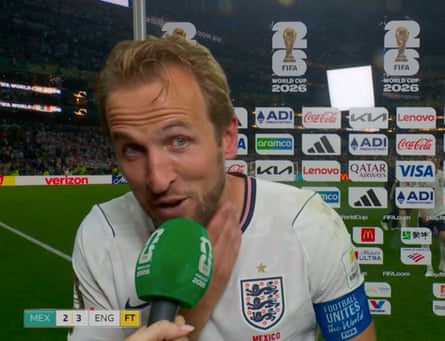
View image in fullscreen Harry Kane losing his voice on the BBC following England’s victory over Mexico Photograph: BBC The refereeing analysis Christina Unkel’s contributions for ITV were head and shoulders above those Darren Cann made for the BBC. She was straightforward and no-nonsense, while he couched his views in so many caveats as to make them, sadly, almost pointless. Winner: ITV
Neither offering was in the league of Nessun Dorma in 1990 or ITV’s unexpected Mexico 1986 banger, but Rascal Flatts’ Life is a Highway began to grate quite early in the tournament, leaving the BBC’s animated titles, with memorable scenes and figures from World Cup history recreated, looking and sounding vastly superior. Winner: BBC
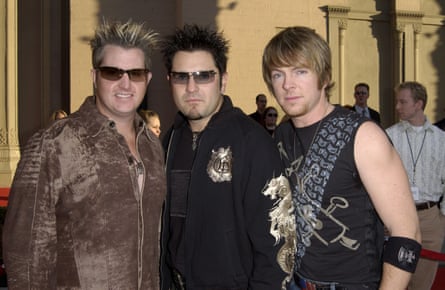
View image in fullscreen Rascal Flatts: Highway to Hell. Photograph: Steve Granitz/WireImage And the most unexpected viral moment Danny Murphy’s inexplicable decision to start talking about his deceased cat called Bob who ran away in a Royal Mail van just because Norway had bought on a player called Oscar Bobb will haunt the rest of his career. “The game’s not that bad,” deadpanned the BBC’s Steve Bower in response. Winner: In a way, all of us. Except Bob
Sources: The Guardian